WHEN THE GOVERNMENT GETS IT WRONG, WHO PAYS?
NEW MEDIA | KING’S INSIGHT
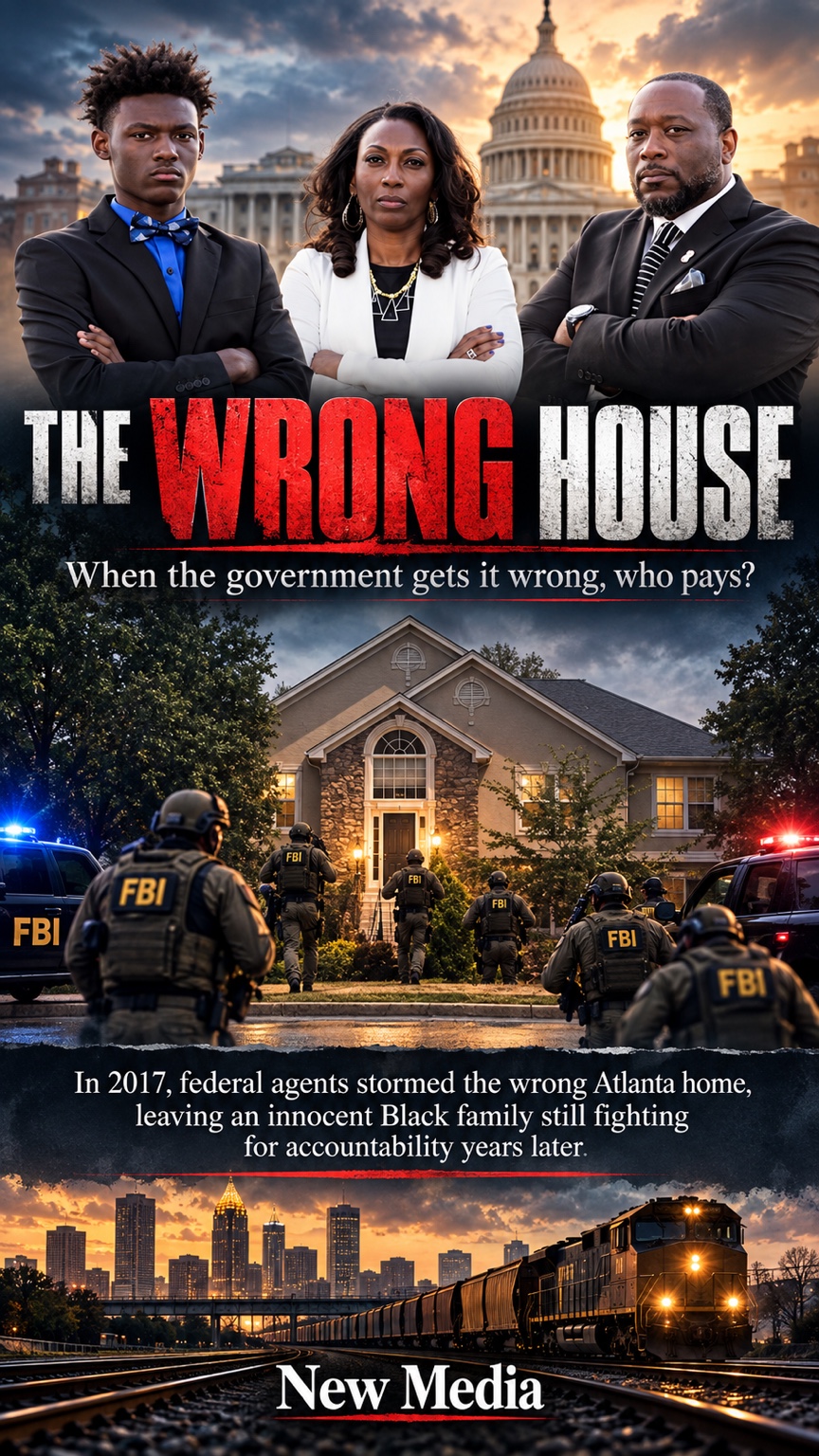
Imagine you’re asleep in your house with your family at 5 in the morning when suddenly federal agents break down your door, throw a flashbang grenade, and enter with guns drawn. Your family is terrified, your child is frightened, and nobody knows what’s happening. Then the agents discover they have the wrong house. Now imagine suing the federal government for what happened, only to discover that the same government has laws protecting it from your lawsuit. Sounds crazy, doesn’t it? Well, that’s exactly what happened to an Atlanta family.
On October 18, 2017, FBI agents raided the home of Curtrina Martin and Hilliard Toi Cliatt at 3756 Denville Trace in Atlanta. Their 7 year old son was inside. The agents were supposed to be at 3741 Landau Lane, searching for a suspected gang member. Instead, an entire SWAT team entered an innocent family’s home. The operation’s leader, Agent Lawrence Guerra, blamed his personal GPS device for the mistake. He later discarded that device without providing an explanation. But here’s my question. An entire FBI SWAT team participated in this operation. They had a warrant identifying the correct address. Were none of the other agents responsible for verifying where they were going?
The family sued, and after years of litigation, the 11th Circuit Court of Appeals issued a ruling on October 7, 2026. The court allowed the family’s constitutional claim against Agent Guerra to continue but dismissed their claims against the federal government. How? Through something called sovereign immunity, which generally protects the government from lawsuits unless Congress allows them. In 1946, Congress passed the Federal Tort Claims Act, allowing citizens to sue the federal government for certain wrongful acts committed by its employees. But Congress included exceptions, one of which protects certain decisions made by government employees while exercising their judgment. That’s called the discretionary function exception.
Now, this is where things get interesting. In 1973, federal narcotics agents raided the wrong homes of innocent families in Collinsville, Illinois. Congress responded in 1974 by changing the Federal Tort Claims Act to allow lawsuits against the United States for certain intentional misconduct by federal law enforcement officers. That was supposed to give victims more protection, not less. But Congress left the original discretionary function exception in place. Fast forward to 2026, and another innocent family has its home raided by federal agents, only to discover that the government can still invoke that exception to avoid liability. Even the appellate judges questioned the legal precedent they were required to follow.
Now think about that for a minute. Congress expanded the law in 1974 because federal agents were raiding innocent people’s homes. More than 50 years later, another family is fighting to hold the government accountable for the same type of mistake. So what happened? The original exception didn’t change, but courts spent decades interpreting how broadly it applied. And those interpretations helped determine why this family’s claims against the United States were dismissed. Did Congress actually fix the problem, or did the courts’ interpretation of the exceptions leave the same problem sitting there?
Then there’s qualified immunity, another legal protection, but this one applies to individual government officials. It can protect officers from personal lawsuits unless they violate rights that were already clearly established under the law. The appeals court determined that Agent Guerra wasn’t entitled to that protection at this stage. However, that doesn’t mean the family has won its case against him. It simply means their claim can move forward.
But this brings us to a larger conversation about tort reform. A tort is a civil wrong that causes somebody harm, and tort reform involves changing the rules governing lawsuits and financial compensation. These changes can limit damages, alter who can be held liable, or make certain claims harder to pursue. Supporters say tort reform helps control insurance costs, discourages frivolous lawsuits, and protects businesses from excessive litigation. But who has been pushing many of these reforms? Major corporations, insurance companies, and business organizations, including the U.S. Chamber of Commerce, which has its own Institute for Legal Reform. Critics argue that some of these changes protect powerful institutions financially while making it harder for injured people to receive fair compensation. Now, sovereign immunity isn’t the same thing as corporate tort reform, but both raise an important question about how the law limits financial responsibility. When somebody suffers a legitimate injury, who benefits from the rules that determine whether they can recover compensation?
And that brings me back to the FBI raid. Agent Guerra wasn’t the only person involved. Other agents physically entered that home, searched the residence, and detained the occupants. The constitutional issue wasn’t somebody putting the wrong address into a GPS. It was federal agents entering a home they had no warrant to search. Yet the government’s financial responsibility and the individual agent’s responsibility are being treated differently because of how these legal protections work.
Here’s something else worth considering. Courts have applied the discretionary function exception in cases involving federal regulators, national park maintenance, prison housing decisions, and law enforcement operations. In a 1997 case, Mesa v. United States, federal agents arrested the wrong person, and the government successfully relied on this same exception. In a 2021 case, Shivers v. United States, the court applied the exception to claims arising from a federal prisoner’s housing assignment. Those decisions helped shape the legal precedent the judges were required to consider in this Atlanta case. The question is whether protections intended for legitimate government decisions should extend to mistakes that result in innocent people having their constitutional rights violated.
And that brings me to a question Congress ought to answer. When Congress passed a law allowing Americans to sue the federal government, did it intend for that same law to protect the government when its agents violated somebody’s constitutional rights? Because there’s a difference between making a judgment call while doing your job and violating the rights of people who had nothing to do with your investigation.
We’re constantly reminded that nobody is above the law. But this case forces us to examine what that statement actually means. A family had its home invaded by federal agents who were supposed to be somewhere else. Nearly 9 years later, they’re still fighting over who can be held responsible. And while the legal system continues sorting through immunity, discretion, and liability, the family is left dealing with the consequences of an operation they had absolutely nothing to do with.
If the government can make the mistake, why should the innocent family have to fight this hard to make the government answer for it?
NEW MEDIA | KING’S INSIGHT
Where the truth will never be silenced.