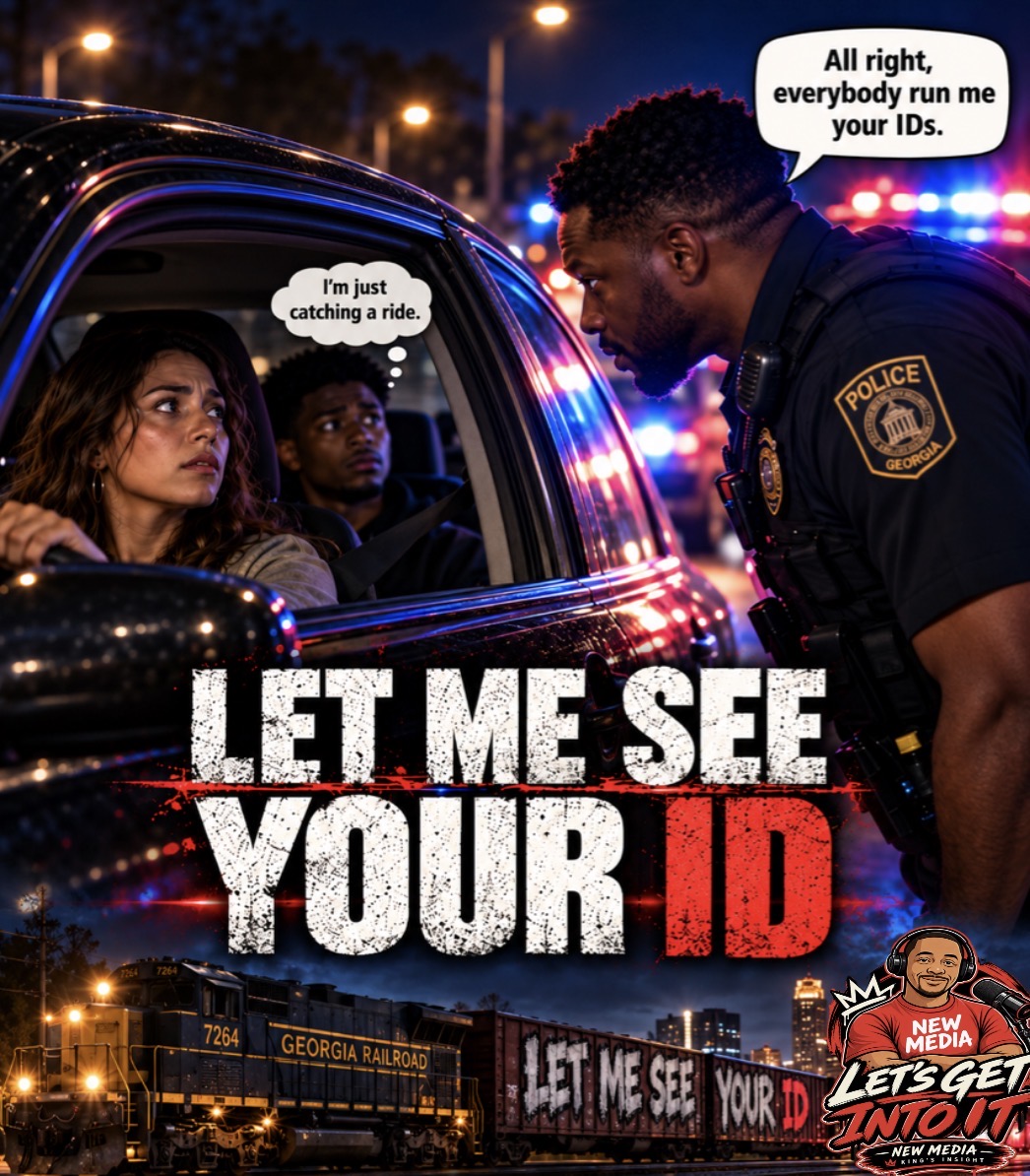
How many times have we heard those 5 words coming from police officers and sheriff’s deputies across America? Somebody walking down a public sidewalk, recording government officials, or simply riding in the passenger seat of a vehicle, and suddenly an officer wants their identification. And when somebody questions why, the response is almost predictable. “You have to identify yourself.” “I’m giving you a lawful order.” “If you don’t comply, you’re going to jail.”
Well, here’s something every police officer and sheriff’s deputy in America needs to understand. Just because the words are coming out of your mouth doesn’t make them a lawful order. Wearing a badge doesn’t give you unlimited authority, and refusing a voluntary request doesn’t automatically constitute obstruction.
I started examining this issue and came across a 2015 Georgia Supreme Court decision, State v. Allen. The case involved Henry County Police Officer Nicholas Jackson, who stopped a vehicle on Interstate 75 for improper lane changes. Patrick Scott was driving, and Dorian Allen was the passenger. Jackson requested identification from both men, and Allen voluntarily handed over his South Carolina identification card.
The officer determined that Scott wasn’t intoxicated, decided to issue a warning, and finished writing it approximately 8 minutes into the stop. He then requested background checks through GCIC and NCIC. The driver’s information came back clear, but the passenger’s information was taking longer. While waiting, Jackson asked permission to search the vehicle. Scott refused. Approximately 1 minute later, Jackson brought out his drug dog, which alerted to the vehicle. A subsequent search uncovered approximately 9.8 pounds of marijuana in the trunk.
Both men challenged the evidence, arguing that the officer had unlawfully extended the traffic stop. The trial court agreed and threw out the marijuana evidence. The Georgia Court of Appeals upheld that decision. But the Georgia Supreme Court reversed, ruling that checking the passenger’s background was a legitimate safety precaution during the traffic stop. That meant prosecutors could use the marijuana evidence against both men.
And here’s where I believe some officers may be misunderstanding this ruling.
The Georgia Supreme Court didn’t rule that every passenger must produce identification simply because an officer demands it.
In fact, on page 15, footnote 7, the Supreme Court specifically explained that it wasn’t deciding whether the officer could force Allen to identify himself because Allen had voluntarily handed over his identification. Although the court acknowledged that Allen wasn’t suspected of committing a traffic violation, it allowed the background check because the officer could use that information to determine whether the passenger had outstanding warrants or a criminal history that might pose a danger.
But that ruling came after Allen voluntarily provided his identification. The Supreme Court wasn’t deciding whether an officer could force an unwilling passenger to identify himself.
Three justices disagreed with allowing the background check to extend the stop. Justice Robert Benham questioned whether officer safety should justify keeping someone detained longer than necessary, warning that officer safety shouldn’t become an excuse for violating Fourth Amendment protections.
That brought me to another Georgia case, Brooks v. Palmer, decided in 2022.
Shantai Brooks was involved in a disagreement at a beauty supply store. She initially wanted police assistance, but the store manager called 911. When Officer Andrew Palmer arrived, Brooks approached him seeking help. He requested her identification. She refused. He arrested her for obstruction.
When the case reached the Georgia Court of Appeals, the judges determined that Palmer didn’t have probable cause, or even arguable probable cause, to arrest Brooks simply because she refused to identify herself.
The court recognized that refusing to identify yourself during a voluntary police encounter isn’t, by itself, a crime.
And here’s something worth paying attention to. The store manager called 911, and the officer was dispatched to the business. Yet the court still treated Brooks’s interaction with the officer as a voluntary police encounter. Just because somebody calls the police doesn’t automatically mean everyone involved is suspected of committing a crime. And just because an officer responds to that call doesn’t mean every person at the scene is legally required to surrender their identification.
These are the distinctions every officer should understand, whether they’ve been wearing a badge for 6 months or 20 years. Yet we continue seeing encounters where officers either misunderstand the law, fail to apply it, or have become so accustomed to exercising authority that routine practices take the place of legal justification. And when an informed citizen questions that authority, some officers respond with sarcasm. “Oh, you got a law degree? Where’d you go to law school?” Well, last time I checked, graduating from a police academy doesn’t make somebody a lawyer either.
There’s nothing wrong with an informed citizen. In fact, law enforcement should encourage citizens to understand their rights. But knowing your rights shouldn’t turn an ordinary encounter into a confrontation simply because an officer doesn’t appreciate being questioned. The Constitution isn’t an inconvenience, and exercising the rights it protects isn’t an act of disrespect.
So to the police chiefs, sheriffs, chief deputies, lieutenants, sergeants, and patrol commanders, please educate your officers. Make sure they understand the difference between a voluntary request and a lawful command. Citizens shouldn’t have to risk detention or arrest because an officer mistakes their authority for the law.
The Constitution doesn’t get its authority from the badge. The badge exercises its authority subject to the Constitution.
And the next time a citizen asks an officer, “What law requires me to identify myself?” perhaps we should stop treating that question as disrespect and start expecting the officer to know the answer.
Because a badge doesn’t make you the law. It makes you responsible for following it.
NEW MEDIA Where the truth will never be silenced.